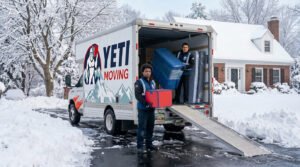
Cold weather doesn’t stop moves. But it changes everything about how you do them. Here’s the Yeti approach.
New England winters are not a reason to delay a move. They are, however, a reason to prepare differently. Snow on the walkway, ice on the truck ramp, frozen fingers trying to seal tape, a mattress that gets wet loading into sleet — none of these are emergencies if you’ve planned for them. All of them become problems if you haven’t.
Yeti Moving operates year-round across New England — Massachusetts, New Hampshire, Maine, and beyond. Winter moves are part of the job. This guide covers what you need to know, from protecting your belongings in the cold to keeping the crew safe and the clock moving.
Before Moving Day: The Cold-Weather Prep
Check the forecast — and plan around it, not against it
You can’t control the weather, but you can control your schedule. If the forecast shows a major storm on your moving day, contact your team as early as possible. Most experienced movers will work with you to adjust timing — early morning before a storm hits, or the day after once roads are clear. A winter move scheduled without checking the 5-day forecast is a move scheduled blind.
Arrange overnight parking for the truck
In New England cities, overnight snow bans go into effect during winter storms. If a moving truck is parked on a snow-ban street when the ban activates, it can be ticketed or towed. Know your city’s snow emergency route rules in advance and arrange a legal overnight spot if the move spans two days.
Clear snow and ice from all access routes before the team arrives
This is the single most important cold-weather prep action. Before the team shows up:
- Shovel and salt the walkway from the door to where the truck will park.
- Clear the stairs — both inside and outside.
- Clear the path to the elevator or building entrance.
- Check that the door can open fully — snow and ice can freeze door thresholds shut overnight.
A team that can’t walk safely between the truck and the door has to slow down. That time is on your bill.
Protect floors inside the home
Winter moves bring in water. Snow on boots, wet dollies, moisture from items coming in from the cold — all of it ends up on your floors. Lay down plastic floor protection or heavy cardboard along the entire moving route inside before the team arrives. This protects your floors and prevents slip hazards inside.
Protecting Your Belongings in Cold Weather
Electronics and temperature-sensitive items
Electronics don’t like cold — and they especially don’t like the rapid temperature change from a cold truck to a warm apartment. When electronics go from 10°F to 70°F instantly, condensation forms inside the device, which can cause damage.
The fix is simple: let electronics acclimate gradually. If possible, transport them in your car rather than the truck, where you can control the temperature. At the destination, leave them wrapped and at room temperature for at least an hour before turning them on.
Wood furniture and cold
Solid wood furniture contracts in the cold and can crack at joints if exposed to extreme temperature changes for extended periods. Cover all wood furniture completely with moving blankets — both for insulation and protection — and load it last if possible to minimize cold exposure time.
Mattresses and upholstered items
Mattresses absorb moisture quickly in wet winter weather. A mattress bag is essential for winter moves — not optional. Without it, a mattress can arrive damp and take days to dry out properly. Same applies to upholstered sofas and fabric items: bag or wrap them completely before they leave the building.
Boxes and cardboard
Cardboard weakens rapidly when wet. If any boxes are stored in a garage, storage unit, or outside space before the move, inspect them for moisture damage before loading. A wet cardboard box will fail under weight mid-transit. Replace any compromised boxes before moving day.
Keeping the Move Safe and Moving Fast
The truck ramp in winter
The truck ramp is the highest-risk surface on a winter move. It becomes ice-covered quickly when it’s cold and wet, and a slip on a loaded ramp is serious. Before the first load:
- Spread rock salt or traction sand on the ramp surface.
- Keep the ramp clear of snow accumulation throughout the move.
- Assign someone to monitor ramp conditions if precipitation is ongoing.
This is standard practice for experienced winter movers. If your team isn’t doing it, ask.
Dress for the work, not the destination
For DIY moves where you’re helping: dress in removable layers. You’ll be working hard, which generates heat, but standing still outside while the team loads is cold. Avoid bulky coats that restrict movement when carrying — a mid-layer fleece with a thin shell is better than a parka for active moving work.
Keep doorways closed between trips
Leaving the front door propped open during a winter move defeats heating and lets in cold, wind, and sometimes precipitation. Use a door stopper that allows the door to open and close quickly between trips rather than staying open. This keeps the interior warm and reduces the moisture brought in with each pass.
After the Move: First Steps at the Destination
- Let the heating run for at least an hour before unloading starts if the destination has been unoccupied and cold.
- Unload electronics last and let them acclimate before turning on.
- Remove mattress bags only after the mattress is in its final room.
- Check wood furniture for any joint stress after warming to room temperature.
- Dry any tools, dollies, or equipment that got wet before storing.
Every move is different. Weather conditions, building access, and item types all affect winter move complexity. We recommend a quote that includes all details for the most accurate estimate.
Yeti Moving works year-round, in every season New England delivers. Beast mode doesn’t take snow days. Let’s make your winter move legendary.